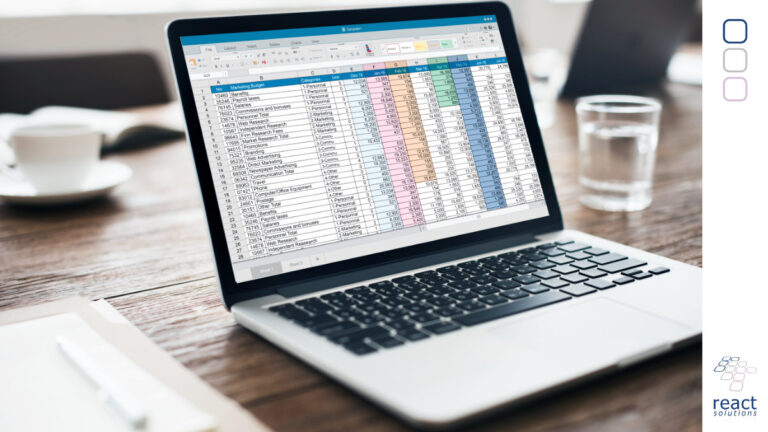
ERP vs Multiple Systems for Growing Businesses
ERP vs Multiple Systems. Why Disconnected Systems Create Operational Inefficiency
Are Disconnected Systems Slowing Your Business Down?
Many growing businesses rely on multiple systems to manage daily operations.
Over time, separate tools are added to solve specific problems:
- Accounting software
- POS systems
- Inventory tools
- Spreadsheets
- Reporting platforms
- Warehouse systems
At first, this may seem manageable.
However, as the business grows, these disconnected systems often create operational inefficiency, limited visibility, and increasing complexity.
Information becomes fragmented. Teams spend more time reconciling data manually. Reporting slows down. Decision-making becomes more difficult.
An integrated ERP system brings your operations together into a single platform, improving visibility, efficiency, and operational control.
- Centralised operational visibility
- Reduced manual processes and duplication
- Better coordination across the business
Book a Consultation to discover whether your business has outgrown disconnected systems.
ERP vs Multiple Systems. Why Businesses End Up Using Multiple Systems
Most businesses do not intentionally create disconnected operational environments.
It usually happens gradually.
As businesses grow, they often introduce new tools to solve immediate operational needs.
For example:
- Accounting software for finance
- POS systems for sales
- Inventory tools for stock management
- Excel spreadsheets for reporting and analysis
- Separate warehouse or procurement systems
Each system may work well individually.
The problem arises when these systems do not communicate effectively with one another.
Over time, this creates fragmentation across the business.
The Problem with Disconnected Systems
Disconnected systems create operational challenges that become more severe as businesses scale.
Systems That Do Not Communicate Properly
When systems operate independently, information becomes isolated in different departments or platforms.
This often leads to:
- Data inconsistencies
- Delayed updates
- Information gaps across the business
Without integration, teams may be working with different versions of the same information.
Duplicate Data Entry
Disconnected systems frequently require staff to capture or update the same information multiple times.
This creates:
- Additional administrative workload
- Increased risk of human error
- Reduced productivity
As transaction volumes grow, this inefficiency becomes increasingly costly.
Reporting Delays and Inaccuracies
When information is spread across multiple systems, reporting often becomes manual and time-consuming.
Businesses may need to:
- Export spreadsheets
- Reconcile data manually
- Combine information from different systems
This slows decision-making and increases the likelihood of reporting inaccuracies.
Lack of Real-Time Visibility
Disconnected systems limit operational visibility.
Without real-time information, businesses struggle to:
- Track inventory accurately
- Monitor operational performance
- Respond quickly to issues
- Make informed decisions
Instead of operating proactively, businesses are often forced into reactive management.
Operational Inefficiency
As systems become more fragmented, teams spend more time managing processes and less time improving operations.
This often results in:
- Slower workflows
- Process bottlenecks
- Communication challenges between departments
- Reduced operational agility
The Hidden Cost of Disconnected Systems
Many businesses underestimate the long-term cost of operational fragmentation.
The impact is not always obvious immediately, but it accumulates over time.
Common hidden costs include:
- Lost productivity due to manual processes
- Increased administrative overhead
- Inventory discrepancies and stock issues
- Delayed decision-making
- Poor customer experience caused by operational inefficiencies
- Reduced profitability due to operational friction
In many cases, these issues become growth barriers.
The larger and more complex the business becomes, the more damaging disconnected systems can be.
What an Integrated ERP System Does Differently
ERP systems are designed to unify business operations within a single platform.
Rather than relying on multiple disconnected tools, ERP creates an integrated operational environment.
Centralised Business Operations
ERP systems connect key operational areas, including:
- Finance
- Inventory
- Procurement
- Sales
- Warehousing
- Reporting
This improves coordination and consistency across the business.
Shared Real-Time Data Across Departments
With ERP, information is updated centrally and shared across the organisation in real time.
This reduces:
- Data duplication
- Reporting delays
- Operational confusion
It also improves decision-making by providing a single source of truth.
Automated Workflows
ERP systems reduce reliance on manual processes by automating routine operational tasks.
This improves:
- Efficiency
- Accuracy
- Process consistency
Automation also allows teams to focus on higher-value activities.
Unified Reporting and Visibility
ERP systems provide integrated reporting across the business.
Instead of reconciling multiple systems manually, businesses gain:
- Real-time operational visibility
- More accurate reporting
- Faster access to critical information
Better Operational Coordination
Integrated systems improve communication and alignment between departments.
This creates smoother workflows across:
- Inventory management
- Sales
- Procurement
- Financial operations
- Warehousing and distribution
Integrated ERP vs Disconnected Systems — Key Differences
| Disconnected Systems | Integrated ERP |
| Multiple isolated data sources | Centralised operational platform |
| Manual reconciliation between systems | Real-time data synchronisation |
| Separate reporting tools | Unified reporting and analytics |
| Duplicate processes and workflows | Automated operational workflows |
| Limited visibility across departments | Business-wide visibility |
| Higher operational friction | Streamlined operations |
Signs Your Business Has Outgrown Multiple Systems
Many businesses reach a point where disconnected systems begin creating more problems than they solve.
Common warning signs include:
- Heavy reliance on spreadsheets
- Constant manual reconciliation between systems
- Different departments use different data sources
- Inventory inaccuracies and stock discrepancies
- Delayed reporting and slow decision-making
- Difficulty managing multiple locations or warehouses
- Increasing operational complexity and inefficiency
If these challenges are becoming more frequent, your business may benefit from a more integrated approach.
Why Integration Matters More as Businesses Grow
Operational complexity increases significantly as businesses scale.
More locations, more transactions, and more inventory movement create greater pressure on systems and processes.
Without integration:
- Visibility decreases
- Operational inefficiency increases
- Decision-making becomes slower
- Administrative workload grows rapidly
Integrated ERP systems help businesses maintain operational control as complexity increases.
ERP for Retail, Wholesale, and Distribution Businesses
Retail, wholesale, FMCG, and distribution businesses are especially vulnerable to the limitations of disconnected systems.
These industries depend on:
- Accurate inventory visibility
- High transaction processing
- Multi-location coordination
- Real-time operational reporting
React Solutions provides ERP systems designed to support:
- Retail businesses
- Wholesale operations
- Distribution companies
- FMCG environments
- Cash & carry businesses
Our focus is on practical operational efficiency, not unnecessary complexity.
Why React Solutions
React Solutions helps growing businesses move from fragmented operations to integrated business management.
Our approach focuses on:
- Practical ERP implementation
- Operational visibility and control
- Industry-specific expertise
- Scalable systems for growing businesses
- Local South African support
We understand the operational challenges that disconnected systems create and how integrated ERP can help solve them.
Is Your Business Ready for a More Integrated Approach?
If your business is spending too much time managing systems instead of improving operations, it may be time to consider ERP.
An integrated ERP system can help improve:
- Operational visibility
- Reporting accuracy
- Inventory management
- Efficiency across departments
- Scalability for future growth
Book a Consultation to discuss how an integrated ERP can support your business.
Frequently Asked Questions
What are disconnected systems?
Disconnected systems are separate business tools or applications that do not communicate or share data effectively with one another.
Why do disconnected systems create inefficiency?
They often require manual data entry, duplicate processes, manual reporting consolidation, and increased administrative work.
What is an integrated ERP system?
An ERP system integrates multiple business functions such as finance, inventory, sales, and reporting into a single operational platform.
Can ERP replace multiple business systems?
In many cases, yes. ERP systems can consolidate several operational tools into one integrated environment.
When should a business move to an integrated ERP?
Businesses should consider ERP when operational complexity, disconnected systems, and visibility challenges begin affecting efficiency and growth.
Request a Demo
Please fill in the request form and we will be in touch to schedule a demo at a date and time convenient for you.
ERP Insights
Read our Latest Articles

Why Businesses Lose Money Without Real-Time Data

The Link Between Operations and Profitability